
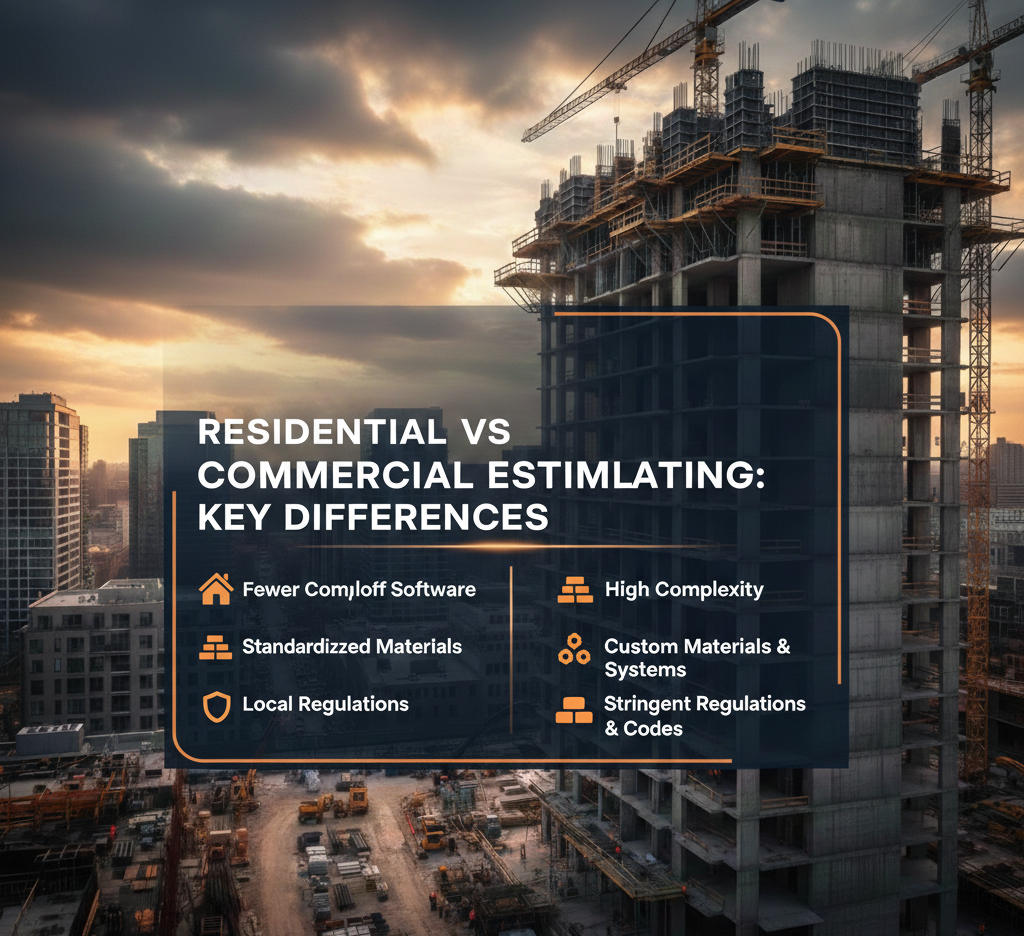
Construction estimating is a critical step in any project. Accurate estimates ensure projects stay on budget, bids remain competitive, and resources are used efficiently. However, residential and commercial projects have different requirements, challenges, and processes when it comes to estimating. At Growzix Estimation, we specialize in both, helping clients plan and execute projects with precision.
Here’s a closer look at the key differences between residential and commercial estimating:
1. Project Scope and Complexity
Residential projects are usually smaller in scale and involve fewer trades. Estimators focus on homes, apartments, or small renovations, where scope changes are relatively simple to manage.
Commercial projects, on the other hand, are larger and more complex, often involving multiple stakeholders, subcontractors, and specialized systems like HVAC, elevators, and fire suppression. Commercial estimating requires detailed analysis of complex plans and coordination across various disciplines.
2. Cost Structure
Residential estimating often deals with standardized materials, finishes, and simpler labor structures. While budgets are important, there is typically less variation in cost compared to commercial projects.
Commercial estimating involves more variables, including high-tech materials, custom specifications, and larger quantities. Cost breakdowns must account for long-term operational considerations, permitting, and compliance with commercial codes and standards.
3. Regulatory Compliance
Residential projects primarily follow local building codes and zoning requirements. Commercial estimating, however, must consider a wider range of regulations, including ADA compliance, fire safety, environmental standards, and sometimes LEED certification.
4. Timeline and Project Management
Residential projects often have shorter timelines and simpler scheduling, which allows estimators to prepare quick but precise estimates.
Commercial projects require detailed scheduling and phased construction planning. Accurate estimates must align with project milestones, procurement cycles, and subcontractor schedules to avoid delays and cost overruns.
5. Software and Tools
While many tools overlap, commercial estimating often requires advanced software capable of handling large-scale plans, multi-trade coordination, and detailed cost databases. Residential estimating can rely on more straightforward takeoff tools for standard materials and smaller plans.
6. Decision-Making and Bidding
Residential projects often involve direct communication with homeowners, allowing for simpler decision-making and quicker approvals.
Commercial estimating requires collaboration with multiple stakeholders, including architects, engineers, and facility managers. Accurate estimates must support complex bidding processes and multi-tiered approvals.
Conclusion
Both residential and commercial estimating require accuracy, attention to detail, and industry expertise, but the scope, complexity, and processes differ significantly. Understanding these differences helps builders, contractors, and developers plan better, reduce risks, and stay on budget.
At Growzix Estimation, our team is experienced in both residential and commercial projects. We provide precise construction estimates and material takeoffs, helping clients bid competitively, plan efficiently, and execute projects with confidence.
Contact Growzix Estimation today to get reliable estimates for your next residential or commercial project.